Three Mosquito Species Pick Different People as Favorites
Three mosquito species each ranked the same 119 volunteers differently in an iScience study, with attraction tied to the presence or absence of body odors.
Published:
Read time: 4 min
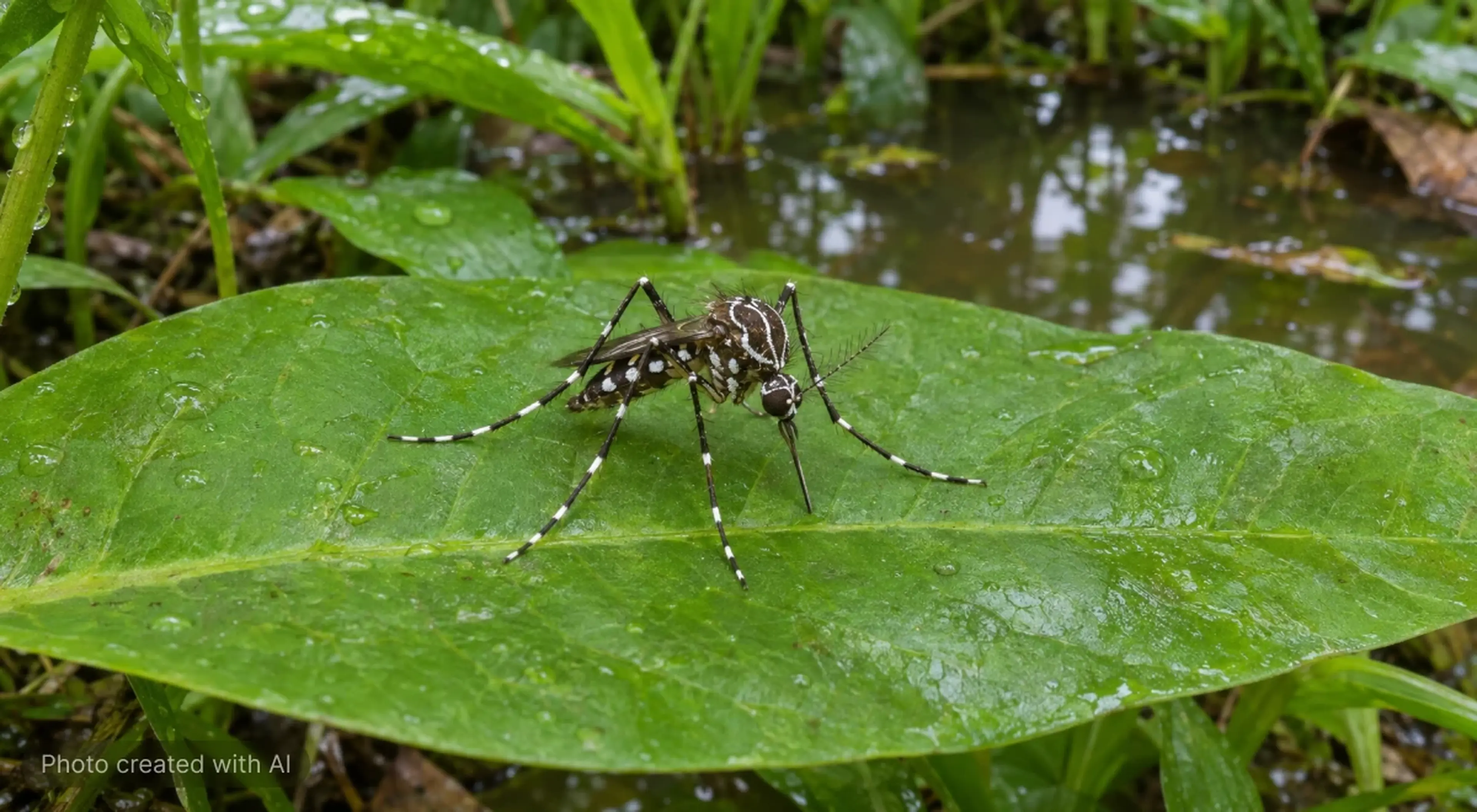
In a uniport olfactometer, a device that measures how strongly insects are drawn toward an odor, a mosquito is tested against one volunteer at a time. In the iScience study from Florida International University and the University of Zurich, the rankings of the 119 volunteers do not match across species. Aedes aegypti, Aedes albopictus, and Culex quinquefasciatus each favor a distinct subset of the group, so no single list of most attractive people fits all three.
A new paper in iScience published on July 31, 2026 reports that three mosquito species each ranked the same 119 volunteers differently. The team spans Florida International University (Kaylee Marrero, Matthew DeGennaro) and the University of Zurich (Dani Lucas-Barbosa, Niels Verhulst). The authors say humans are not equally attractive to mosquitoes, leaving some people more exposed to mosquito-borne illness.
Three species, 119 volunteers, three different rankings
Each species was tested against the whole group. For every volunteer, the team recorded how strongly each mosquito was drawn to that person.
That gives each volunteer three scores, one per species. Sort the volunteers by one species' score and you get a list from most to least attractive. The headline result is that the three lists disagree, so a person who ranks high for one species can sit lower for another.
The species are the yellow fever mosquito, the Asian tiger mosquito, and the southern house mosquito, in the same order as the Latin names above. Aedes and Culex are separate genera, the biological rank just above species.
Take three film critics who each score the same 119 movies. Nobody expects their lists to match, and each critic ends up championing a different handful. Here the mosquitoes are the critics and the volunteers are the movies: the same 119 titles, three different sets of favorites.
The comparison stops at motive. A critic can explain a score, while a mosquito answers to chemical cues, and the authors say differences in body odor likely let mosquitoes tell people apart.
One split showed up by sex: Aedes aegypti, but not the remaining two species, was slightly more attracted to male than to female participants, a small tilt in an otherwise species-specific picture.
Which scents pull mosquitoes in, and which ones don't?
For two of the species, mostly an absence. Aedes aegypti and Culex quinquefasciatus attraction was associated with the lack of scent molecules such as cyclic alcohols and monoterpenes. Aedes albopictus attraction was associated with the presence of ketones.
In plain terms, volunteers whose odor lacked those molecules tended to draw more of those two species than volunteers whose odor carried them. For the third species, it ran the other way round, with ketones on the plus side.
To reach that point, the team used each species' attraction rates to define high-attraction and low-attraction human odors. It did the same for bacterial taxa, meaning groups of related bacteria. Skin microbes are a known source of body odor.
Monoterpenes are scent molecules that many plants make, and cyclic alcohols are alcohols built around a ring of carbon atoms. Ketones are another family, with acetone, the solvent in many nail polish removers, as the household example.
Wonderfully weird, really: two species lean toward people who lack certain smells, while the third leans toward a smell some people carry.
The authors describe both unique and shared cues for targeting hosts. The two species with the missing-compound pattern in common still ranked individual volunteers in their own ways.
Associations, not proven causes
The odor and bacteria results are associations. They tie attraction rates to the presence or absence of compounds, and they do not show that any single compound draws a mosquito in or turns it away. A compound can also travel with some other trait of a person's skin or microbes that the mosquitoes are actually responding to.
The measure itself is attraction in an olfactometer, a controlled test of odor, not a count of bites on a person.
Which of these cues mosquitoes actually use to find a person remains to be tested.
Only three of the many mosquito species were tested, and the male tilt in Aedes aegypti was slight. One group of 119 people is a single snapshot, so the rankings describe this cohort and these three species rather than mosquitoes or people in general.
Pick up the science of scent and attraction on the Nibble app
In an olfactometer test of 119 volunteers, the person a mosquito favored changed with the species, and attraction tracked which odor compounds were present or missing in each person's scent. Which of those compounds do the pulling is still open.
Biology is the place on the Nibble app, which covers 35+ topics, for questions like how an insect picks one person from a crowd. Lessons take between 1.5 and 15 minutes, enough for a quick look at a single question or a longer one at how animals read chemical clues.