Siberian Tomb Hair and Seeds Suggest Cannabis Use 2,800 Years Ago
Seeds and hair traces from a Siberian tomb suggest cannabis use for intoxicating effects in the early eighth century B.C., a University of Bern-led team says.
Published:
Read time: 4 min
Picture this: preserved human hair from the central chamber of a princely tomb in Siberia goes through high-resolution mass spectrometry and returns chemical signals consistent with cannabis compounds. An international team led by the University of Bern reports that these traces, together with about 1,000 cannabis seeds from the same grave in the Republic of Tyva, point to intoxicating cannabis use in the early eighth century B.C. The team calls it the oldest directly dated evidence of its kind.
Science published the work on November 5, 2026, and it shows that seeds and hair from one Scythian grave carry evidence of cannabis use, according to a press release from the University of Bern. The lead author, Gino Caspari, is an archaeologist at the University of Bern and the Max Planck Institute of Geoanthropology. The team combined radiocarbon dating, plant remains, and mass spectrometry of hair.
About 1,000 seeds, six radiocarbon dates
Cannabis is one of the most commonly used psychoactive plants today, yet showing how prehistoric people used it is hard.
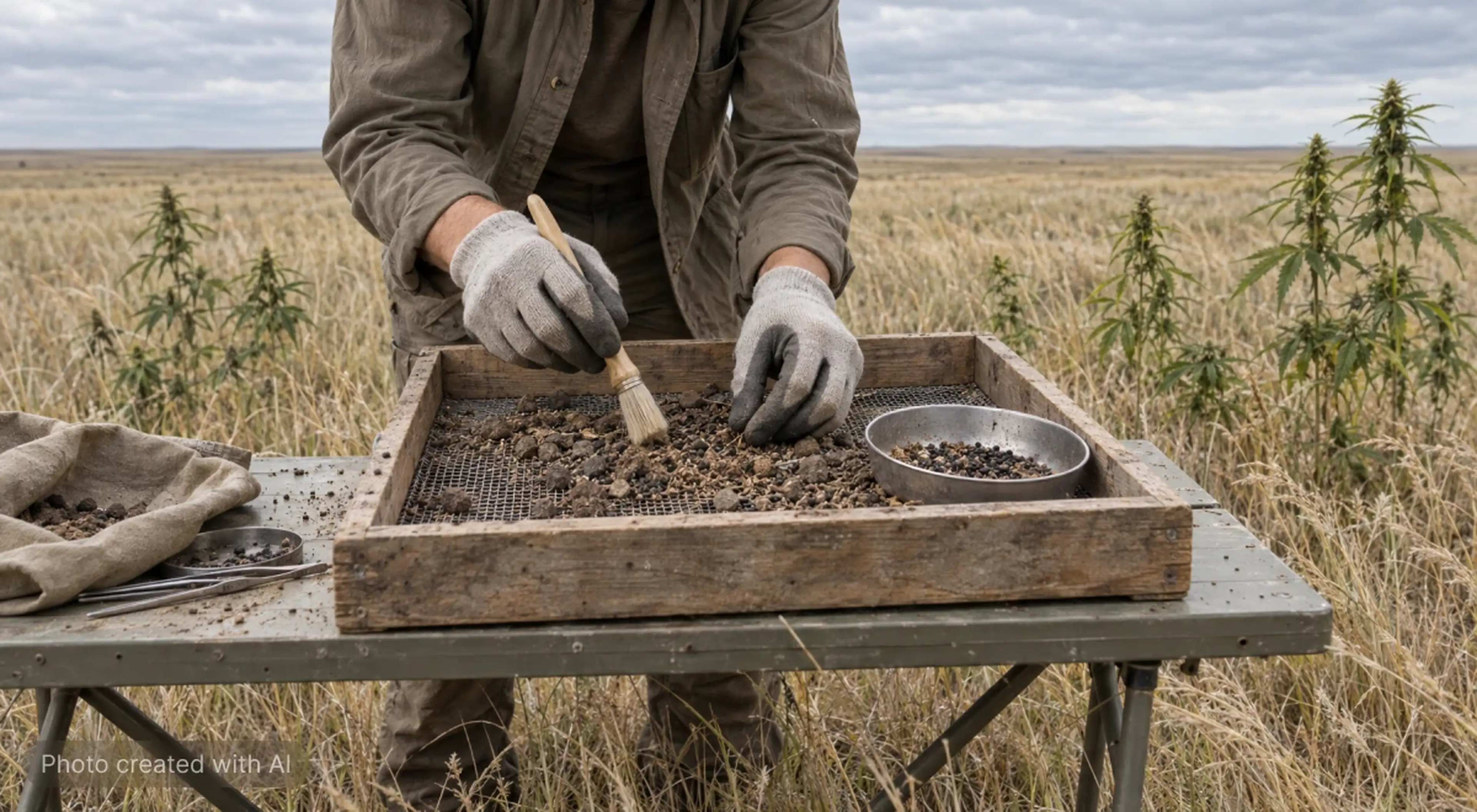
Flowers, leaves, and resin rot away, so direct traces are rare. Seeds are what turned up in the tomb: about 1,000 of them.
The seeds are hard to spot in the soil, but under good lighting they show a net-like pattern that identifies them as cannabis. Cannabis also supplied oil and fiber, so a pile of seeds could mean several things.
Six seeds were radiocarbon dated directly, which ties the date to the seeds themselves rather than to the soil around them. Together with other dating results, those dates indicate that the seeds were placed in the grave in the early eighth century B.C.
Caspari says the seeds show that cannabis "played an important role in the rituals surrounding the burial."
Seeds make a good start and a poor verdict. The team says they likely come from wild plants, so nothing shows whether anyone grew them for psychoactive effects. A seed in a grave does not by itself prove the plant was used as an intoxicant.
Chemical signals in the hair, and what they cannot say
The hair fills that gap. It came from the central burial chamber, and the team analyzed it with high-resolution mass spectrometry, among other methods. Caspari calls the pairing of plant remains with molecular traces in the human body "particularly insightful."
In several samples, the team found clear signals consistent with cannabinol, or CBN. Weak signals that, judging by mass, are consistent with THC also appeared. THC is the main intoxicating compound in cannabis.
Iron left in damp air turns to rust, and rust tells you iron was there. THC can oxidize into CBN in a similar way, so CBN fits a history of THC in the body.
The comparison stops at one point. THC oxidation is only one of the ways CBN forms, which is why the signals are described as consistent with it, not as a direct reading.
The hair analyses point to cannabis use, the researchers say, but they have limits. They do not allow a reliable estimate of the amount consumed, and they cannot show whether the compounds entered the body through inhalation or ingestion.
Later sites in Central Asia, with residues of cannabinoids (the plant's active compounds) in vessels and on heated stones, clearly indicate inhalation. The Tyva analyses confirm no method.
Nor do the findings say how much THC the plants of that time held, or whether anyone selected or cultivated plants for higher levels of active compounds. Both questions remain open.
A Scythian burial mound, horse sacrifices, and sequencing ahead
The tomb, known as Tunnug 1, lies in the Republic of Tyva in southern Siberia and belongs to high-ranking members of Scythian society, a horse-riding culture of the Eurasian steppe. The team places the cannabis finds in a ritual burial context.
An earlier publication by the same team reported the remains of 18 horses arranged on the mound. Several dozen more horse sacrifices have come to light since, along with scattered human bones. Caspari says human sacrifices were most likely part of these burials as well.
The work continues, and the next analysis is genetic. DNA from part of the plant material is already being read, and Caspari describes its preservation as excellent. The aim is to learn more about how the crop was domesticated and how it spread.
Follow what ancient graves left behind on the Nibble app
Radiocarbon-dated seeds and chemical traces in hair from one Siberian grave place intoxicating cannabis use at least 2,800 years back. Neither the method of consumption nor the potency of the plants is known.
Want to ask someone from the past how they saw burial and ritual? Nibble includes chats with 10+ historical figures, so the question can go straight to them. On the Nibble app, the History topic covers rituals, rulers, and what ancient people left in their graves, from seeds to hair.