Microbes on The Night Watch Include a Sugar-Refinery Bacterium
A bacterium first found at a sugar refinery, plus skin and soil microbes, has turned up on Rembrandt's The Night Watch, ARTIS-Micropia and the Rijksmuseum say.
Published:
Read time: 4 min
A bacterium first identified at a Japanese sugar refinery in 2013 has turned up on Rembrandt's The Night Watch. Microbacterium saccharophilum is among the first microbes cultured from the painting by ARTIS-Micropia in Amsterdam and the Rijksmuseum. Skin bacteria showed up as well, along with species known from soil and plant roots, in a mix the project team calls surprising. Sampling is still under way, and the identified colonies are already on display in Amsterdam.
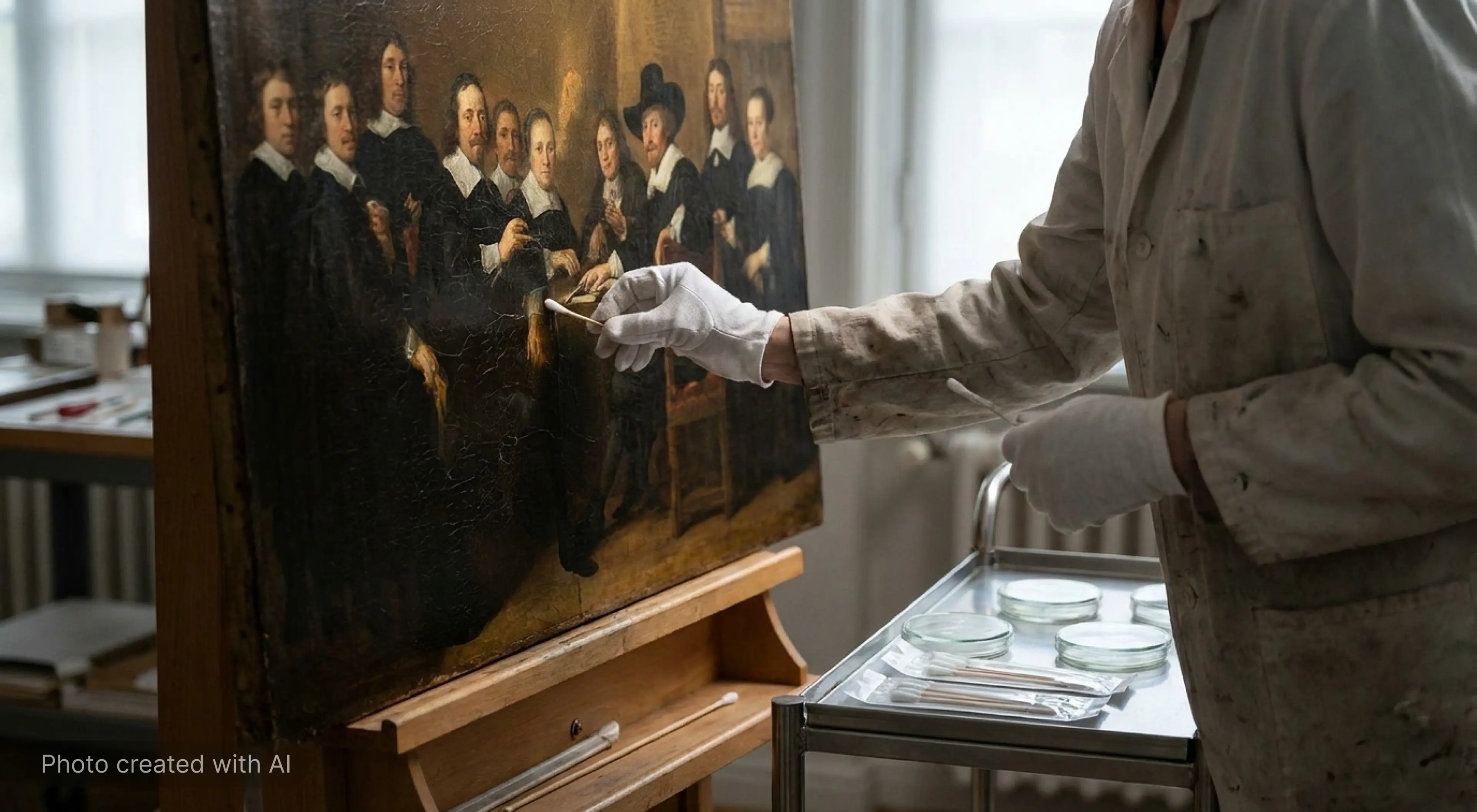
The press release from ARTIS-Micropia, published on September 10, 2026, explains that ARTIS-Micropia and the Rijksmuseum are jointly working out which microorganisms live on Rembrandt's painting of Amsterdam citizens who protected their city. A laboratory technician from ARTIS-Micropia and conservators from the Rijksmuseum take the samples with small round pads. Microbiologist Eline van Bloois of ARTIS-Micropia and Katrien Keune, Head of Science at the Rijksmuseum, speak for the two institutions.
Skin bacteria, soil bacteria, and one sugar-refinery import
The first results went up on November 10, 2026. Two of the microbes live on human skin: Staphylococcus epidermidis and Micrococcus luteus. Bacteria known from soil and from around plant roots turned up as well, though the update names no species for those.
Naming a microbe takes a hand-off. ARTIS-Micropia's laboratory grows the cultures, and an external laboratory identifies them, so every name on the list comes from a colony that actually grew. A colony is what one microbe becomes when it keeps multiplying until its descendants form a spot big enough to see, a bit like a single seed turning into a visible patch of grass.
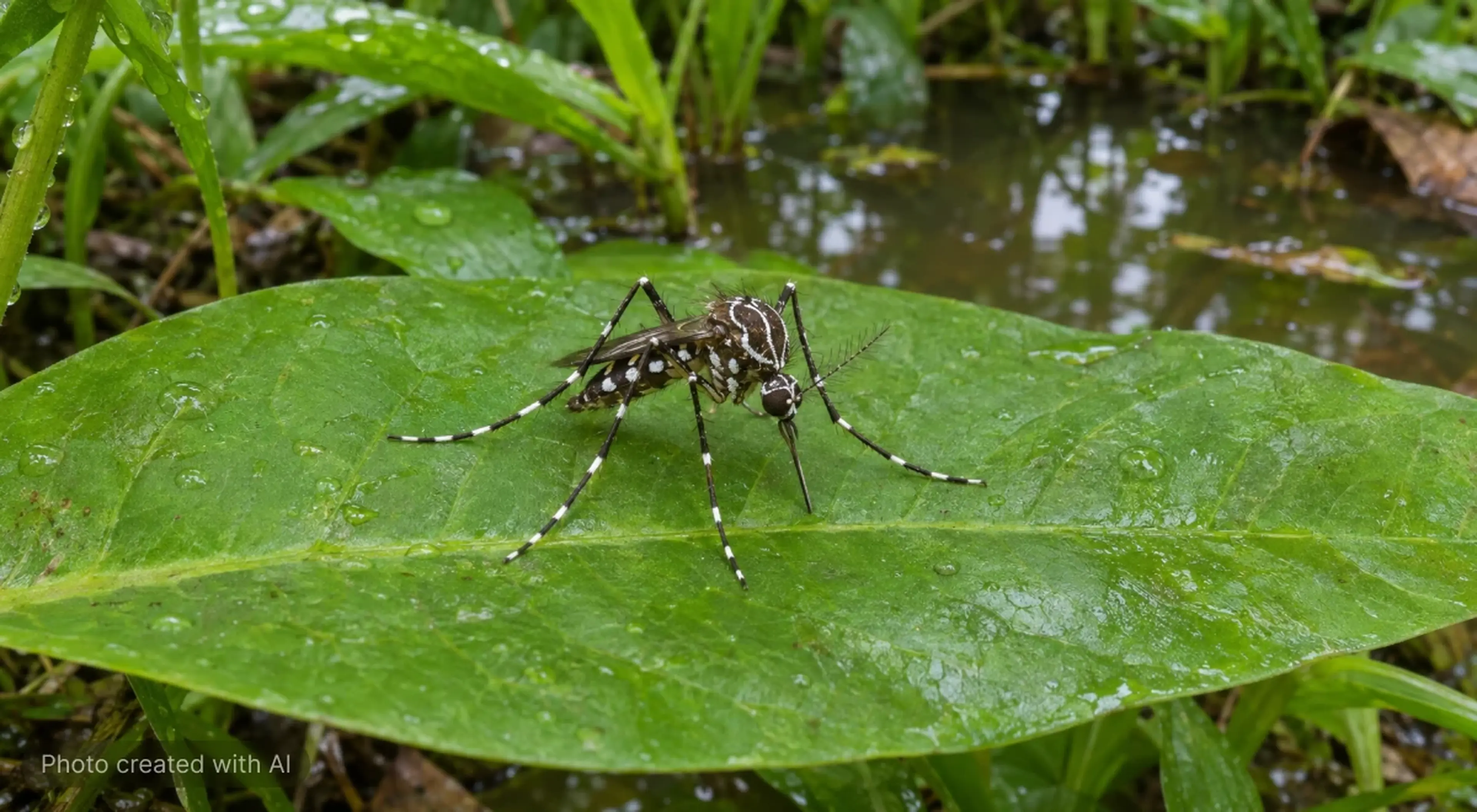
Then there is Microbacterium saccharophilum. Its species name means sugar-loving, and its first identification dates to 2013, at a Japanese sugar refinery.
A refinery microbe on a canvas almost 400 years old.
Around 60 sampling spots on a painting in restoration
Sampling covers around 60 locations over six months, on sections both with and without a layer of varnish.
The painting is mid-restoration. Inside a glass-walled chamber in the Gallery of Honour, with the public watching, Rijksmuseum conservators are removing the yellowed varnish put on in the 1970s.
That work belongs to Operation Night Watch, which the museum launched in 2019 and describes as the largest and most comprehensive research and restoration project ever undertaken on the painting. Keune notes that studying the canvas at macro and micro scale has taught the museum more about how Rembrandt painted it and what condition it is in. The microbe survey is the next step down in size.
Conservators already read a painting in layers, from varnish to canvas. The microbes add one more scale to that reading, far smaller than a brushstroke.
A life-size copy where the colonies go on display
An installation at ARTIS-Micropia has been on display since November 11. It is centered on a life-size reproduction of the painting, with the lab-grown colonies shown beside it. Visitors also get a glimpse of the culturing, and new results are added to the reproduction as samples come in. The show runs until the end of May 2027.
At the opening, the same kind of round pads went to people: forehead samples were taken from Rembrandt Sutorius, Taco Dibbits, Katrien Keune, and Karlien Pijnenborg, as a live demonstration of how the research works.
Van Bloois puts it this way: "Being able to make the microbiome of The Night Watch visible is very special." The microbiome is the community of microbes living in one place. She adds that she never expected to get this close to the masterpiece, and she asks whether Petri dishes full of microbes are "little works of art in their own right."
Unanswered questions about the painting's microbes
How M. saccharophilum ended up on the painting is a mystery for now, and so is what the other microbes say about its history.
The findings so far are names, not tallies. How many microbes of each kind sit on which part of the canvas is not yet known. Two questions from the project stay open for the same reason: whether the painting carries the same bacteria as a household fridge, and whether the girl in the painting has more microbes than the dog.
New samples will be analyzed over the coming months and added to the installation, so the display will keep changing until it closes.
Meet more famous paintings and their stories on the Nibble app
Skin bacteria, soil bacteria, and a species first recorded at a sugar refinery make up the first list of microbes cultured from Rembrandt's masterpiece in Amsterdam by ARTIS-Micropia and the Rijksmuseum, a list that keeps growing while the sampling goes on.
What else does a famous painting carry besides paint, and who finds it out? Art is one of the topics on the Nibble app, which is where that kind of question goes next. Each lesson takes one of five formats: text, video, audio, games, or chats.