Intact Roman Child's Sarcophagus Opened in Constanța, Romania
Archaeologists in Constanța, Romania, opened an intact Roman child's sarcophagus on October 27, 2026, and recovered bronze objects, clay toys, and garlands.
Published:
Read time: 5 min
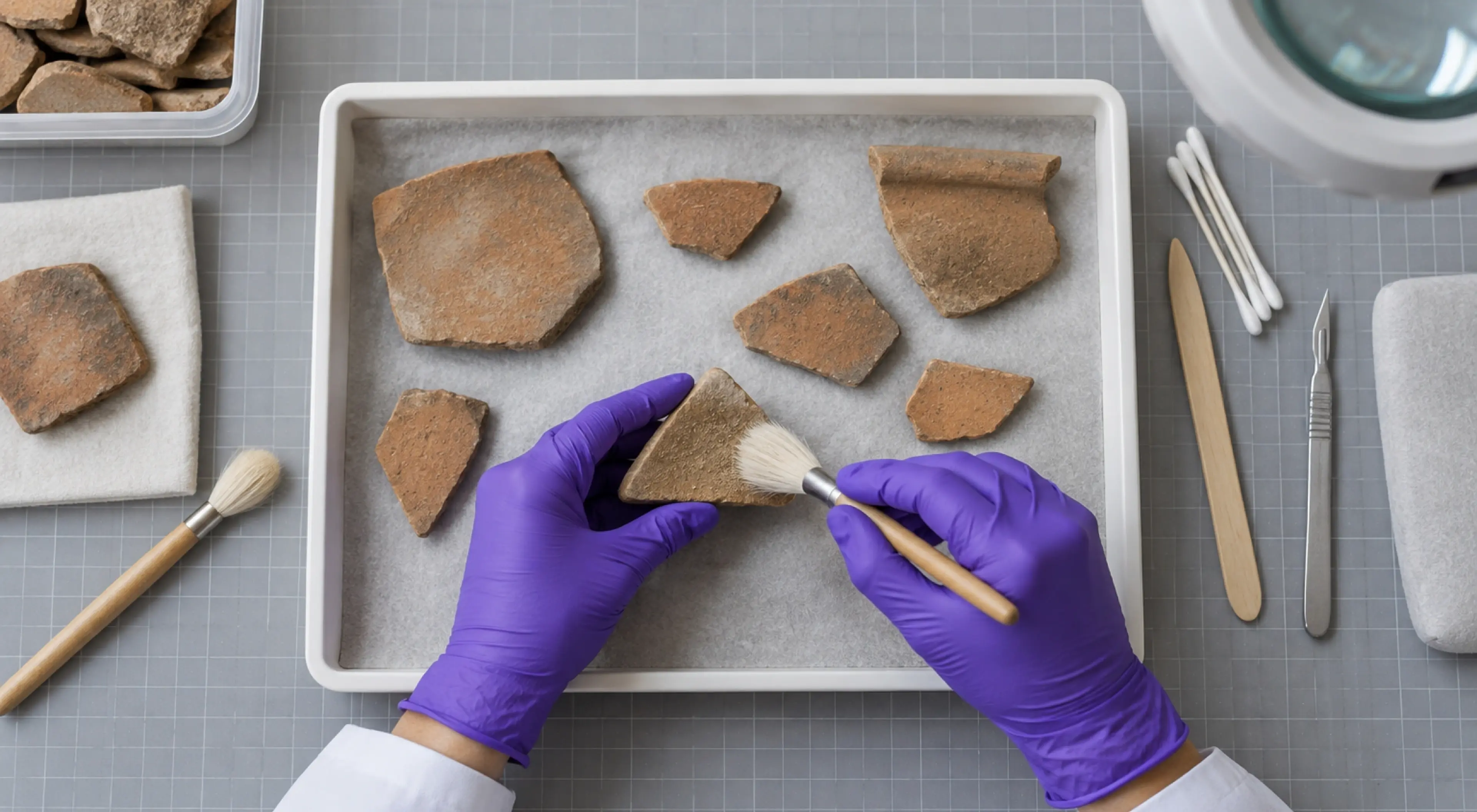
What lay inside a Roman child's sarcophagus that stayed intact in Constanța, Romania? On October 27, 2026, archaeologists, conservators, and restorers from MINAC, the museum in Constanța, opened the sarcophagus and found a child's burial, with a wooden coffin inside. The recovered grave goods include a few bronze objects worn on the person, clay toys, and flower garlands. The museum dates the grave to the 2nd to 3rd centuries AD.
What lay inside a Roman child's sarcophagus that stayed intact in Constanța, Romania? On October 27, 2026, archaeologists, conservators, and restorers from MINAC, the museum in Constanța, opened the sarcophagus and found a child's burial, with a wooden coffin inside. The recovered grave goods include a few bronze objects worn on the person, clay toys, and flower garlands. The museum dates the grave to the 2nd to 3rd centuries AD.
A press release from the museum, dated October 27, 2026, says the find came during preventive archaeological research in Flămânda, an area of Constanța. Archaeologists on site, Cătălin Nopcea and Constantin Băjenaru, flagged the possibility of an intact sarcophagus on October 22, 2026. They later freed it from the ground and moved it to a museum site, where they opened it.
From a hunch to an open sarcophagus
Preventive archaeology means digging ahead of construction, so that whatever lies in the ground is recorded before it is lost. Constanța suits the method, since today's city stands on ancient Tomis, a Greek-founded port on the Black Sea that later became Roman, and the ground still holds its remains.
The first sign of this grave was tentative: a possibility, not yet a finding. On October 22, the archaeologists on site raised the prospect of an intact sarcophagus. Only after they freed it from the ground and moved it to a museum could a team lift the lid and settle the question.
Opening day put three specialties around one stone box. Archaeologists read what objects and their positions say about a burial. Conservators and restorers look after fragile materials, which matters when a grave holds wood and flowers, since organic materials can change quickly once exposed to air. Few lids get such a well-qualified audience.
Inside, the team identified a child's burial with a wooden coffin, so the sarcophagus served as the outer container and the coffin as the inner one. Fun fact: sarcophagus comes from the Greek lithos sarkophagos, "flesh-eating stone", the name of a limestone people believed dissolved bodies quickly.
Bronze, clay and flowers: The inventory the museum reports
The museum calls the recovered objects the funerary inventory, meaning the items placed in a grave with the dead. It lists a few bronze objects worn on the person, clay toys, and garlands of flowers. Specialists lifted these items out of the grave.
Each material has its own odds of surviving, and the list reads like three separate survival stories. Bronze and fired clay can last for centuries underground, while flowers are another matter: plant material normally rots away, which makes floral remains in graves uncommon.
Think of it like this: a grave disturbed long ago is a jigsaw puzzle with pieces missing, and researchers have to guess at the picture. The museum describes this inventory as left untouched, which gives researchers the grave goods as they were deposited.
A burial beside an ancient road in the northern Tomis necropolis
The grave sits at the northern fringe of the Tomis necropolis, the burial ground of the ancient city, near an ancient road the museum calls important. Roman burial grounds generally lay outside city limits, since the Twelve Tables barred burial inside them, and roadsides were a common place for tombs.
The museum dates the burial to the 2nd to 3rd centuries AD, within the Roman era. Its interest lies in how little was disturbed: the sarcophagus came out whole, and its grave goods stayed in place, which it says offers information on how Romans at Tomis buried their dead.
Funerary practice covers the choices of those who buried someone: the container, the goods and the location. For this grave,e the record so far names a sarcophagus holding a coffin of wood, bronze, clay and flowers, and a spot beside a road. Each detail can be set against other Tomis burials.
Preliminary dating and what the press conference added
Two details carry explicit labels. The 2nd to 3rd centuries AD date comes from what the specialists call first observations, so it is preliminary. The museum also says recording the find has barely started, which means this account of the grave goods comes from an early look.
The museum held its press conference on Wednesday, October 28, 2026, at its headquarters in Constanța. Museum manager Delia Roxana Cornea and researchers Constantin Băjenaru, Ana Hamat, and Cătălin Nopcea presented the initial findings. According to the museum's summary of the event, the sarcophagus lay about 1.5 kilometers from ancient Tomis, near a road that linked the city to the fortress of Histria.
The coffin wood survived in unusually good condition, so specialists can study how ancient craftsmen worked and joined it. The grave goods include toys, personal objects and two bulla pendants, which carried a protective role in the Roman world and could point to Roman citizen status. A rooster-shaped toy with rattle elements hints that the child was very young.
Spend more time among the Romans on the Nibble app
An undisturbed Roman child's grave from Tomis is now in the museum's hands: the sarcophagus is intact, the grave goods untouched, and the first dating is to the 2nd to 3rd centuries AD. Specialists can study the burial, its container, and its contents together as a single set.
Follow the thread from Roman roads and burial grounds into the History lessons on the Nibble app, where the traces people left behind become stories. The app covers 35+ topics, and fresh lessons land weekly, so there is always more of the ancient world to read.