A Sixth-Finger Illusion Changes What a Hand Seems Able to Do
A mirror-induced sixth finger enlarged the smallest opening healthy adults thought their hand could fit through and the largest object they felt able to grasp.
Published:
Read time: 5 min
A sixth finger that exists only as an illusion makes people judge that their hand needs more clearance to pass through a gap and can take in larger objects. The surprise is that the wider-opening judgment also showed up in volunteers who reported little or no sensation of the extra finger. A team from Birkbeck and Lancaster University tested 50 healthy adults on two judgments, each made after a short routine of strokes on the hand.
Experiments described in Human Perception and Performance, part of the Journal of Experimental Psychology series, show that this illusion shifts how healthy adults judge what their hand can do.
The paper, "Beyond Five: How the Experience of a Supernumerary Sixth Finger Alters Action Perception," appeared on September 24, 2026. First author Denise Cadete and last author Matthew R. Longo belong to Birkbeck, University of London. Co-authors include Megan Rose Readman and Sally A. Linkenauger, who are based at Lancaster University, along with Harriet Morris and Elisa R. Ferrè.
A phantom digit built from touch that does not match the view
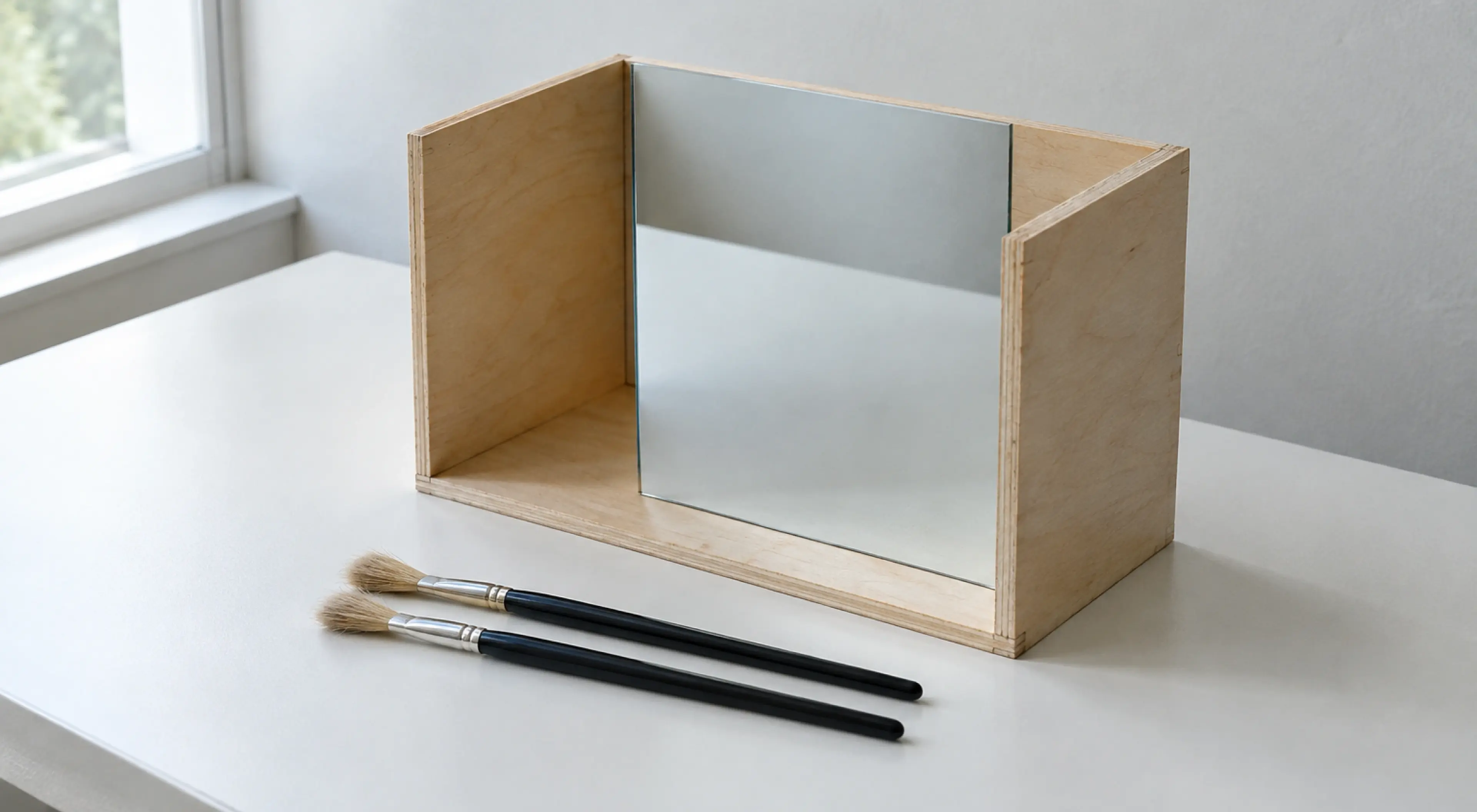
Body illusions work by feeding the brain mismatched signals from sight and touch. Here, the team gave healthy adults the feeling of a spare finger with a mirror arrangement, a setup first described in 2016 as the Anne Boleyn illusion: one hand stayed hidden behind the mirror while the reflection of the other hand appeared in its place. Both hands were stroked in time, so vision and touch seemed to agree.
The researchers call the extra digit supernumerary, which means beyond the usual count. A typical hand has five digits, and here the illusion adds a sixth that exists only as a sensation, created in a person who has no actual sixth finger.
Then came the mismatch. The researcher stroked the hidden little finger on its far side, while the reflection showed strokes landing on an empty table beside the reflected little finger. That conflict invites the sense of a second little finger. Control trials ended differently: the final strokes landed on both little fingers.
A first check was whether the illusion took hold. Participants rated feelings such as having six fingers on a scale from 0 to 10. Ratings of feeling six fingers averaged 4.36 after the illusion routine and 1.13 after the control routine. The study was preregistered, meaning its plan was filed before data collection.
Wider openings, larger objects, and a result without the feeling
After each routine, participants made two estimates. One was the smallest opening the hand could fit through, set on an adjustable frame. The other was the largest object they felt able to grasp, chosen from a series of blocks in graduated sizes.
The illusion enlarged both. After the illusion routine, participants wanted a wider gap for the hand to pass through, and they picked a bigger maximum object than after the control routine. The shifts were modest: measured against each person's real limits, opening estimates moved from 0.92 to 0.97 and grasp estimates from 0.98 to 1.01. A hand that seems to carry an extra finger gets treated as a larger hand: one that needs more room and can span more.
The authors report that the opening-size shift also appeared in people who reported little or no extra finger. This came from an exploratory split of the sample, not a preregistered analysis. The 28 volunteers who consciously felt the finger and the 22 who did not both chose wider openings after the illusion, though the shift was about twice as large in the first group.
The grasping shifts within each subgroup were not statistically significant, and across the whole sample, how strongly people felt the finger did not significantly track how much their estimates changed. The authors read the pattern as a sign that the illusion works on two partly distinct levels, an implicit representation below awareness alongside the explicit one of what people say they feel.
The body schema as a sketch that can be redrawn
Body schema is the brain's running record of the body's size and shape, used to plan movement. Think of it like this: a sketch pad rather than a blueprint, erased and redrawn as new information arrives. The authors conclude that the hand's representation, and the action capabilities and boundaries it defines, can be updated quickly and flexibly.
They describe this as plasticity in the body schema. Here the update followed one added finger and showed up in two judgments: how much room the hand needs and how large an object it can take. People with larger shifts in one judgment tended to have larger shifts in the other, too.
Healthy adults and judged actions: Where the evidence stops
The participants were healthy adults, so the results say nothing yet about people with injuries, limb differences, or neurological conditions. The tasks asked for estimates of what the hand could do, and the finding concerns those perceived action abilities and boundaries.
Whether the shifts last, and whether they carry over to hand movements made while the illusion is active, remains open. Participants made their estimates by looking, with their hands still and covered, so they imagined the actions rather than carrying them out, and imagined and real movement may differ.
The study tested a single sample of 50 adults, so how far the pattern generalizes is untested. Because the shifts also appeared in people who felt little or no extra finger, the effect may reflect touch being mapped onto empty space beside the hand rather than a mental image of a sixth finger. The reported results cover estimates only, and the authors present them as a statement about the body schema's flexibility rather than about movement itself.
More on how the mind maps the body on the Nibble app
In this laboratory study of healthy adults, a mirror and a few well-timed strokes made a hand seem larger to volunteers, with or without a conscious sense of an additional finger. The measures were their estimates of the smallest opening the hand could pass through and the largest object it could grasp.
Readers can explore how perception shapes the sense of one's own body next, in the Psychology lessons on the Nibble app. Each lesson takes between 1.5 and 15 minutes, short enough for a coffee break, and the library grows with fresh lessons weekly.